The past couple of weeks have been pretty brutal for the Oregon health insurance market.
On May 21st, Providence Health Plan announced that they were shutting down pretty much their entire insurance division across Oregon (which also impacts some people in Washington and California):
Providence Health & Services plans to exit most of its Oregon health insurance business next year, citing rising costs, tougher regulation and intensifying competition from national insurers — a move that will force hundreds of thousands of Oregonians to find new coverage.
...Providence Health Plan, based in Portland, is Oregon’s third-largest health insurer, covering more than 421,000 Oregonians. It also covers over 13,000 members in Washington and 4,800 in California.
Every year around this time I start my annual individual & small group market rate filing analysis project. This involves spending months painstakingly tracking every insurance carrier rate filing for the upcoming year to determine just how much average insurance policy premiums on the individual market are projected to change.
Carriers tendency to jump in and out of the market, repeatedly revise their requests, and the confusing blizzard of actual filing forms sometimes make it next to impossible to find the specific data I need.
The actual data I need to compile my estimates are actually fairly simple, however. I really only need three pieces of information for each carrier:
Mending Health Notifies Maine Bureau of Insurance that it Will Cease Offering Health Insurance Plans
AUGUSTA, ME – Mending Health, formerly known as Taro Health, has notified the Maine Bureau of Insurance that it will no longer offer health insurance as of January 1, 2027.
Mending Health’s approximately 1,100 members will keep their health plans through the end of their existing plan year.
Individuals/families who obtained Mending coverage through CoverME.gov, or who purchased a plan directly from Mending Health, can select a new plan with another health insurance company during the annual open enrollment period beginning November 1, 2026. New coverage will take effect January 1, 2027.
ACA exchangeenrollment has only dropped by about 4% in Texas since Congressional Republicans allowed the enhanced federal subsidies to expire at the end of last year.
Initial signups during Open Enrollment were actually up about 5% vs. OEP 2025...but effectuated enrollment quickly dropped to practically even year over year in January and was down 4.3% as of February.
Still, thanks largely to Texas having a robust Premium Alignment policy in place (which they boosted a bit more this year, as I understand it), the drop-off in the Lone Star state has been far more modest than in most of the country. Even so, that's still over 146,000 Texans who lost healthcare coverage in just the first two months of the year.
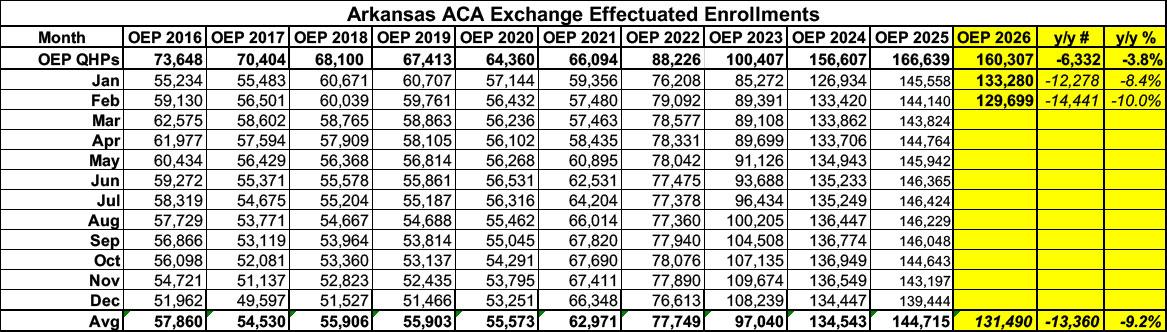
ACA exchange enrollment has dropped by 10% in Arkansas since Congressional Republicans allowed the enhanced federal subsidies to expire at the end of last year.
Initial signups during Open Enrollment were only down 3.8% vs. OEP 2025...but effectuated enrollment was down over 8% year over year in January and by 10% (around 14,000 enrollees) as of February.
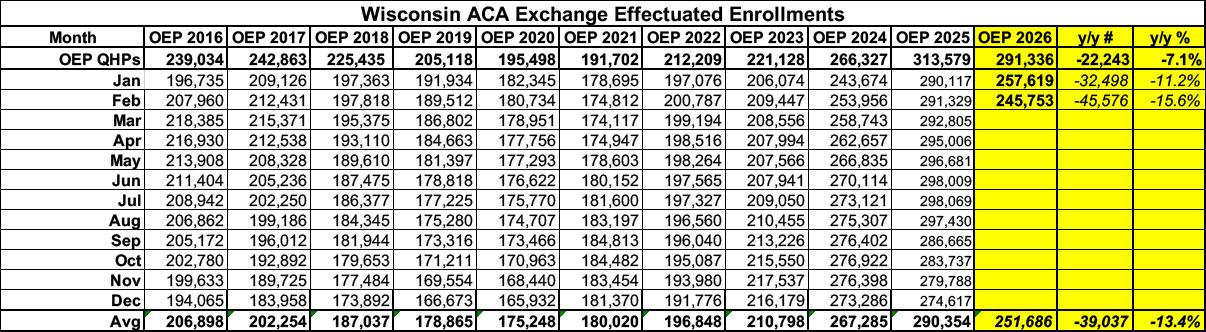
ACA exchange enrollment has dropped by over 15% in Wisconsin since Congressional Republicans allowed the enhanced federal subsidies to expire at the end of last year.
Initial signups during Open Enrollment were down 7% vs. OEP 2025...but effectuated enrollment was 11% lower year over year in January, rising to 15.6% lower as of February.
That's over 45,000 Wisconsinites who already lost coverage in just the first two months of the year...a number which has likely continued to climb since then.
Here's what this looks like visually, with both 2025 and 2019 (the last pre-COVID year, which didn't include the enhanced subsidies) included for comparison:
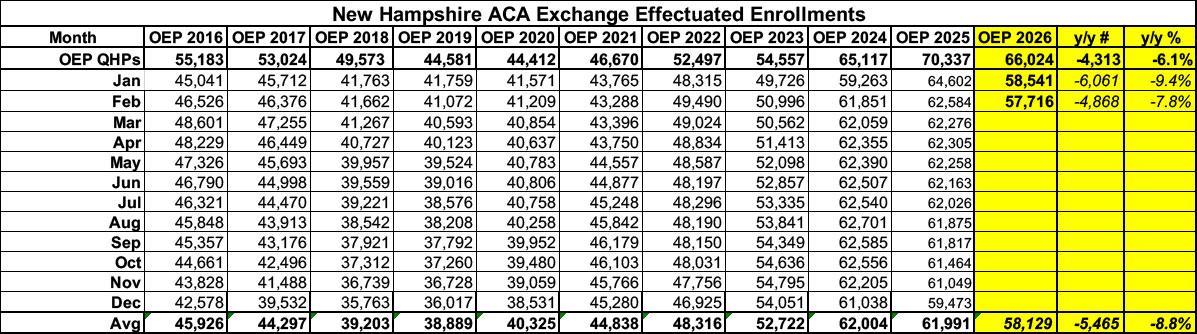
ACA exchangeenrollment has dropped by ~8% in New Hampshire since Congressional Republicans allowed the enhanced federal subsidies to expire at the end of last year.
Initial signups during Open Enrollment were down ~6% vs. OEP 2025...but effectuated enrollment shrank by a bit more in the first two month sof the year...although interestingly it actually nudged back up a smidgen in February relative to a year earlier.
Here's what this looks like visually, with both 2025 and 2019 (the last pre-COVID year, which didn't include the enhanced subsidies) included for comparison:
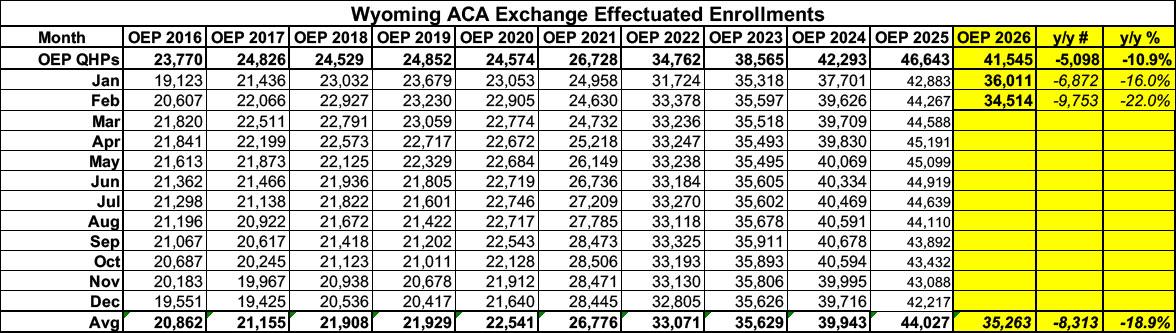
ACA exchange enrollment has dropped by 22% in Wyoming since Congressional Republicans allowed the enhanced federal subsidies to expire at the end of last year.
Initial signups during Open Enrollment were already down 11% vs. OEP 2025...and the drop-off grew to 16% year over year as of January and 22% as of February. That's nearly 10,000 Wyomingites who have lost ACA healthcare coverage in just the first two months of the year. While this may sound like a pretty small number, it's huge when you consider that Wyoming only has around 590,000 residents total.
Here's what this looks like visually, with both 2025 and 2019 (the last pre-COVID year, which didn't include the enhanced subsidies) included for comparison:
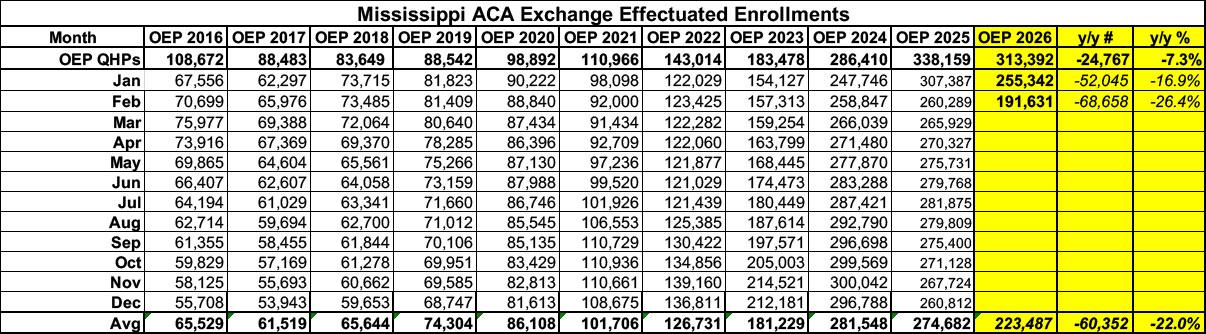
ACA exchange enrollment has dropped by more than 26% in Mississippi since Congressional Republicans allowed the enhanced federal subsidies to expire at the end of last year.
Initial signups during Open Enrollment were already down 7.3% vs. OEP 2025...but effectuated enrollment was 16.9% lower year over year in January and 26.4% lower as of February.
That's over 68,000 Mississippians who already lost coverage in just the first two months of the year...a number which has almost certainly continued to get worse since then.
Here's what this looks like visually, with both 2025 and 2019 (the last pre-COVID year, which didn't include the enhanced subsidies) included for comparison:
ACA exchange enrollment has dropped by 13% in West Virginia since Congressional Republicans allowed the enhanced federal subsidies to expire at the end of last year.
Interestingly, while plan signups during the 2026 Open Enrollment Period were down nearly 17% vs. OEP 2025, effectuated enrollment as of February was actually only down 13%...it was down nearly 20% year over year in January, but actually increased slightly between January and February, which I believe makes West Virginia one of the only states to see that happen this year. Huh.
We'll have to see what develops over the rest of the year, of course, but this is especially unusual given that West Virginia has by far the highest unsubsidized premiums in the country this year (and will next year as well, as you'll see if you read further).
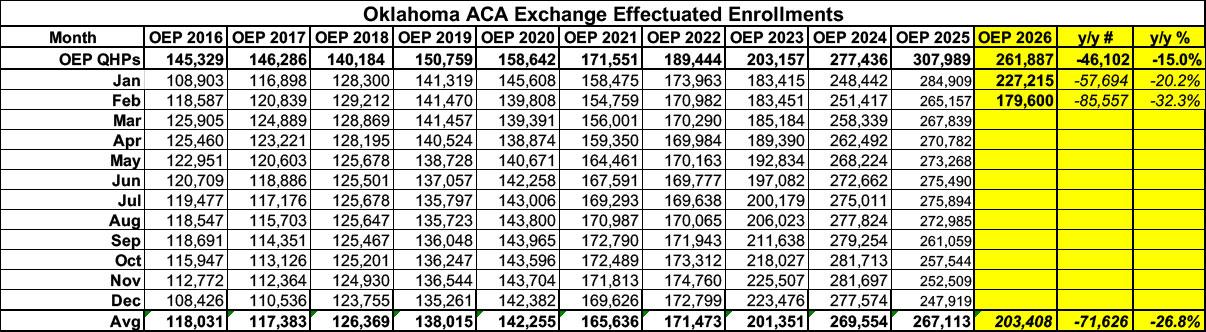
ACA exchangeenrollment has dropped by NEARLY A THIRD in Oklahoma since Congressional Republicans allowed the enhanced federal subsidies to expire at the end of last year.
Initial signups during Open Enrollment were already down 15% vs. OEP 2025...and effectuated enrollment continued to plummet, down 20% vs. a year prior in January and by over 32% year over year in February.
That's over 85,000 Oklahomans who already lost coverage in just the first two months of the year...a number which has likely continued get worse since then.
Here's what this looks like visually, with both 2025 and 2019 (the last pre-COVID year, which didn't include the enhanced subsidies) included for comparison:
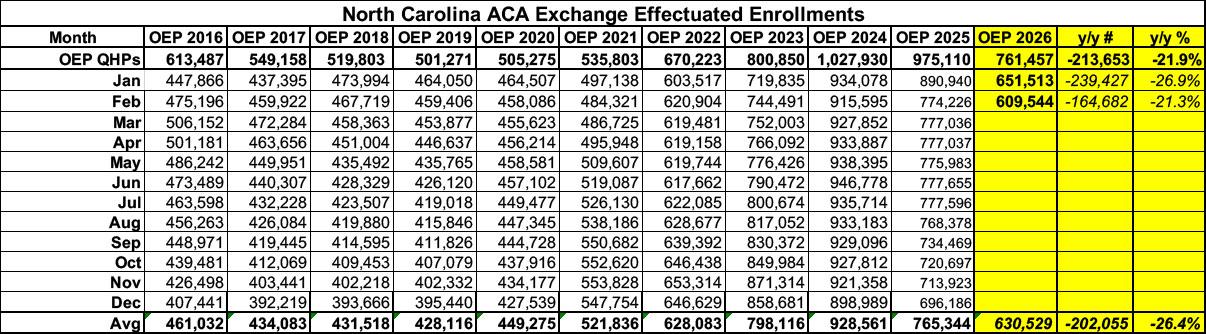
ACA exchange enrollment has dropped by more than 26% in North Carolina since Congressional Republicans allowed the enhanced federal subsidies to expire at the end of last year.
Technically speaking, the year over year drop was as high as 27% in January due to an oddly sharp effectuated enrollment drop in January 2025...but over the first two months of 2026 this averages out to a hair over 200,000 North Carolinians losing coverage in just the first two months of the year:
Here's what this looks like visually, with both 2025 and 2019 (the last pre-COVID year, which didn't include the enhanced subsidies) included for comparison:
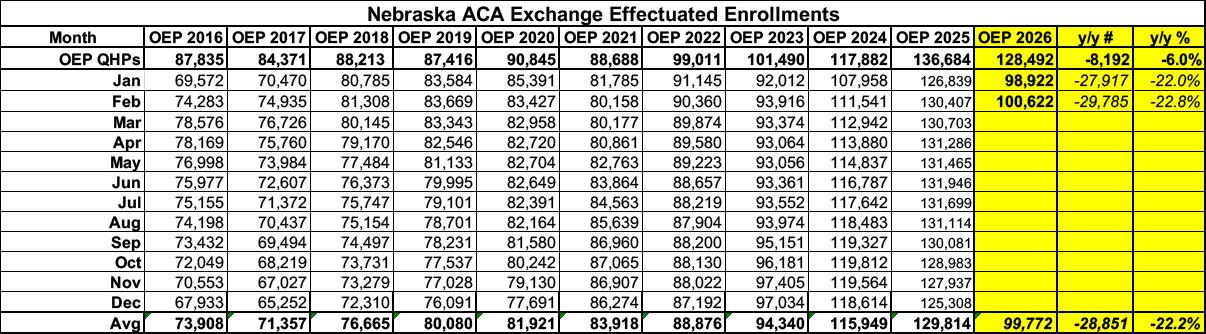
ACA exchange enrollment has dropped by 23% in Nebraska since Congressional Republicans allowed the enhanced federal subsidies to expire at the end of last year.
Initial signups during Open Enrollment were only down 5% vs. OEP 2025...but effectuated enrollment was 22% lower year over year in January and 23% lower as of February (although, interestingly, effectuated enrollment actually increased slightly from January to February both years).
That's nearly 30,000 Nebraskans who already lost coverage in just the first two months of the year...a number which has likely continued to climb since then.
ACA exchange enrollment has dropped by 20% in Kansas since Congressional Republicans allowed the enhanced federal subsidies to expire at the end of last year.
Initial signups during Open Enrollment were only down 3.6% vs. OEP 2025...but effectuated enrollment was 9.3% lower year over year in January, rising to 20% lower as of February.
That's over 36,000 Kansans who already lost coverage in just the first two months of the year...a number which has likely continued to climb since then.
Here's what this looks like visually, with both 2025 and 2019 (the last pre-COVID year, which didn't include the enhanced subsidies) included for comparison:
As of today, I've compiled the preliminary 2027 rate filings for the ACA-compliant individual and small group markets across 25 states (including the District of Columbia). So far, the weighted average increases being requested range from as little as 6.5% in Vermont to as much as 22.9% in Alaska. Interestingly, both of these states already have some of the highest individual market premiums for unsubsidized enrollees in the nation...over $1,000 per month per enrollee.
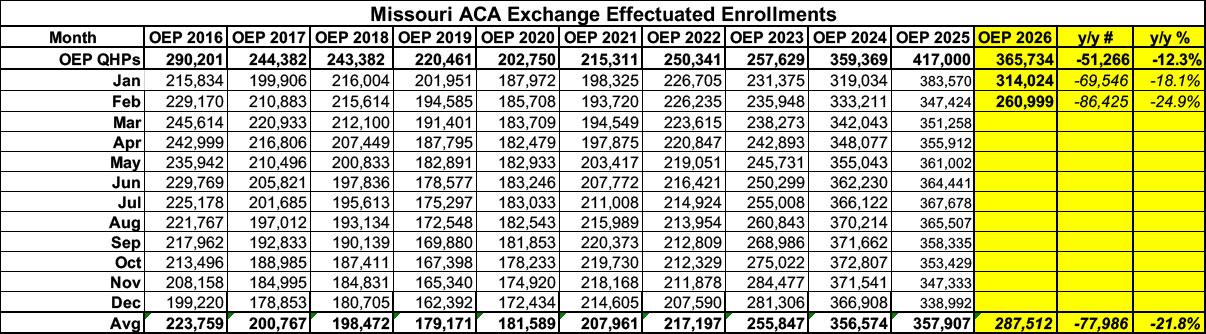
ACA exchange enrollment has dropped by a whopping 25% in Missouri since Congressional Republicans allowed the enhanced federal subsidies to expire at the end of last year.
Initial signups during Open Enrollment were already down over 12% vs. OEP 2025...but effectuated enrollment in was 18% year over year as of January and 25% lower in February. That's over 86,000 Missourians who have lost their individual market healthcare coverage.
Here's what this looks like visually, with both 2025 and 2019 (the last pre-COVID year, which didn't include the enhanced subsidies) included for comparison:
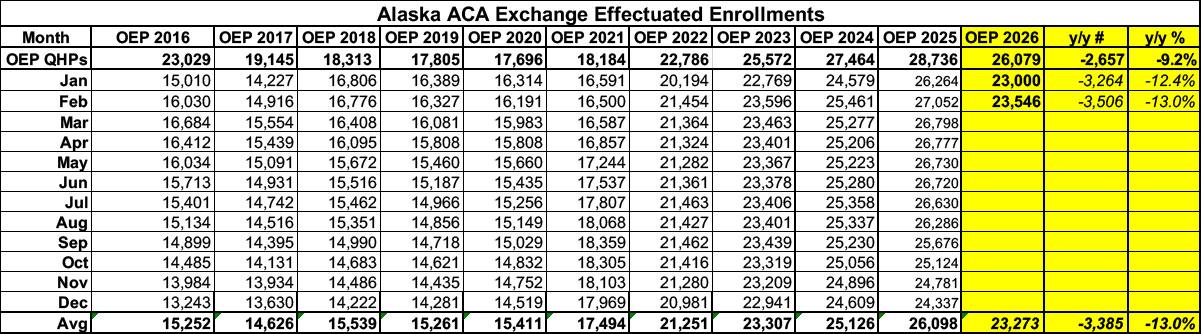
ACA exchange enrollment has dropped significantly in Alaska since Congressional Republicans allowed the enhanced federal subsidies to expire at the end of last year.
Initial signups during Open Enrollment were already down 9.2% vs. OEP 2025...but effectuated enrollment as of January 2026 was down over 12% year over year...increasing to a 13% drop as of February.
The good news, such as it is, is that due to Alaska having such a small ACA population to begin with, this only amounts to around 3,400 people losing coverage...which is small comfort if you're one of those 3,400 people, of course:
Here's what this looks like visually, with both 2025 and 2019 (the last pre-COVID year, which didn't include the enhanced subsidies) included for comparison: