


2027 Rate Changes - Montana: +23.3% indy market; +18.0% sm. group (FINAL)
Thu, 09/24/2026 - 12:31pm
Originally posted 8/11/26
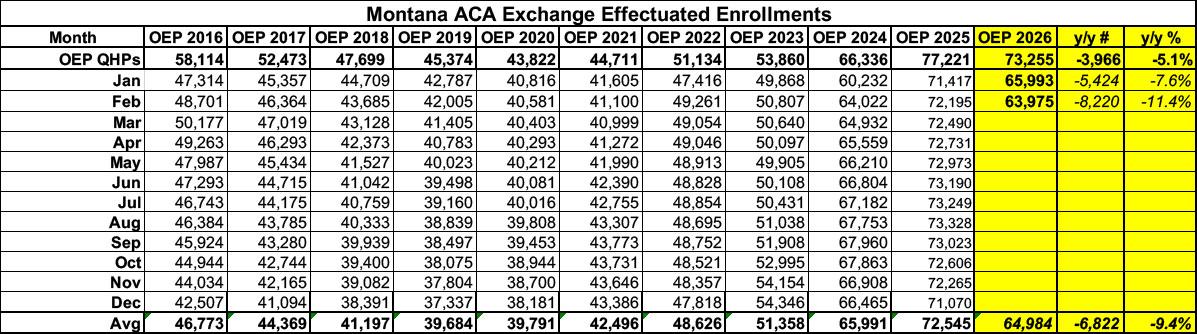
ACA exchange enrollment has dropped by more than 11% in Montana since Congressional Republicans allowed the enhanced federal subsidies to expire at the end of last year.
Initial signups during Open Enrollment were only down 5.1% vs. OEP 2025...but effectuated enrollment was 7.6% lower year over year in January, rising to 11.4% lower as of February.
The effectuated enrollment numbers have likely continued to drop more since then (the raw numbers aren't that eyebrow-raising since Montana is a small state, population-wise).
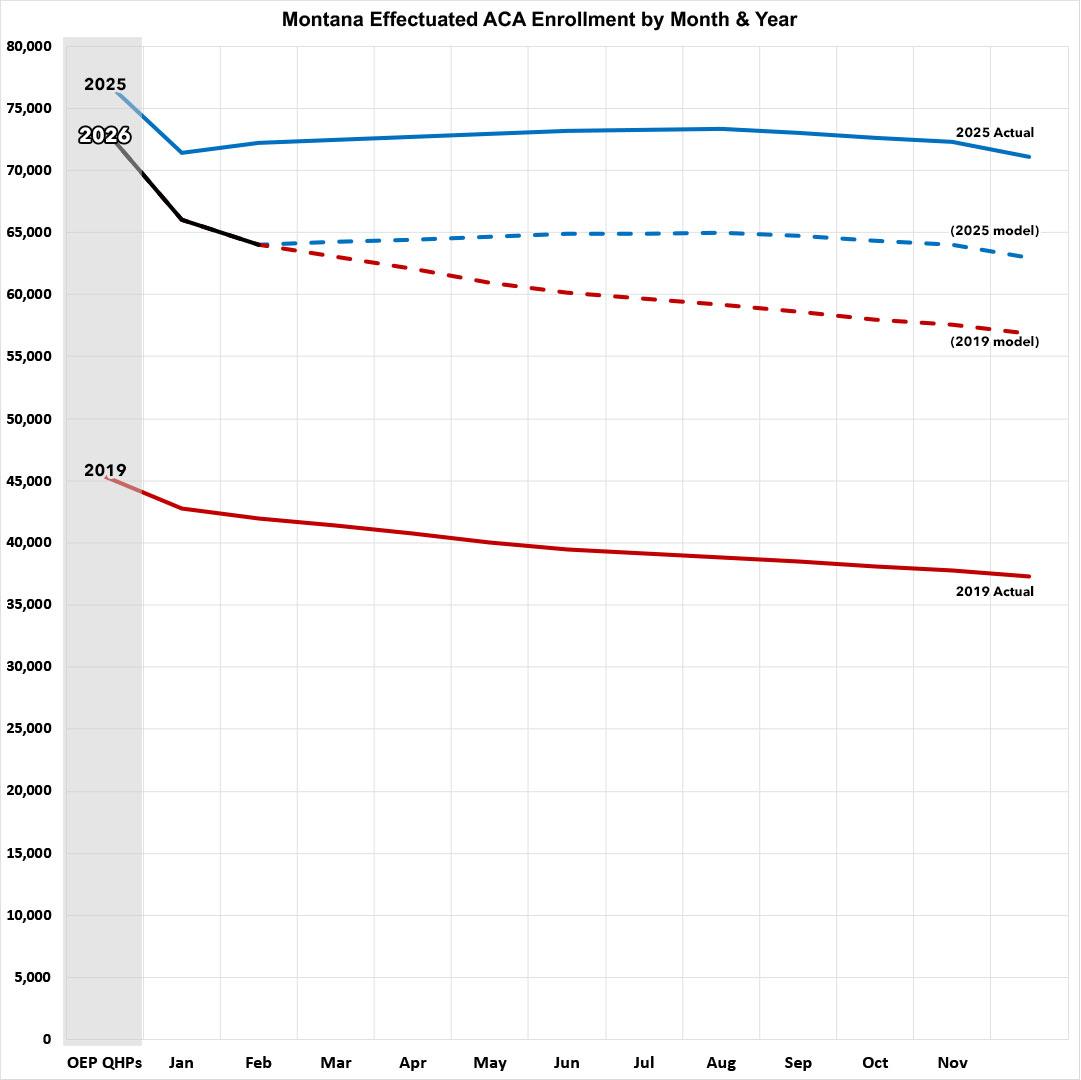
Here's what this looks like visually, with both 2025 and 2019 (the last pre-COVID year, which didn't include the enhanced subsidies) included for comparison:
Looking ahead to 2027, the preliminary rate filings for both the individual and small group markets are now available via the federal Rate Review database:
BLUE CROSS BLUE SHIELD OF MONTANA:
Blue Cross and Blue Shield of Montana (BCBSMT) filed rates to be effective January 1, 2027, for its Individual ACA metallic coverage. As measured in the Unified Rate Review Template (URRT), the range of rate changes for these plans is an increase of 7.0% to an increase of 38.2%. The following are the average rate increases by product:
Blue Preferred Blue Focus Changes in allowable rating factors, such as age, geographical area, or tobacco use, may also impact the premium amount for the coverage.
There are currently 42,637 members on Individual Affordable Care Act (ACA) plans that may be affected by these proposed rates.
Financial Experience of the Product
Consistent with the filed URRT, earned premiums for Individual plans during calendar year 2025 were $315,998,464 and total claims incurred were $274,379,232. The proposed rates effective January 1, 2027, are expected to achieve the loss ratio assumed in the rate development.
Changes in Medical Service Costs
The proposed rates reflect expected change in year over year medical service and prescription drug costs, which includes changes in reimbursement rates to providers, changes in expected utilization of services, the mix and intensity of services, and the introduction of new procedures and technologies.
Changes in Benefits
There are no legally required changes to covered benefits and no significant changes to the benefit structure. Cost-sharing changes were made within these products allowing plans to maintain their metal status, which can contribute to the change in rates.
State Reinsurance
The proposed rates reflect the impact of the state reinsurance program under SB 125.
Administrative Costs and Anticipated Margins
The Affordable Care Act expects health plans in the individual market to spend at least 80% of each premium dollar they collect to pay for medical care and activities that improve health care quality for members. If health plans fail to spend at least 80% on medical claims and health care quality initiatives, they are required to give back money to consumers through a premium rebate. These rates assume BCBSMT will once again exceed the 80% threshold.
MONTANA HEALTH COOPERATIVE:
As of March 2026, Montana Health Cooperative (MHC) has 18,262 insureds enrolled who will be affected by 2027 Individual Market rate changes if they continue their coverage. Before federal subsidies, the average change in premium for these individuals will be 27.7%. The requested rate change varies by product with the smallest average change of 15.0% for PEAK PPO BRONZE STANDARD and the largest average change of 53.5% for PEAK PPO CATASTROPHIC .
Financial Experience of Product
The Individual market financial experience for calendar year 2025 was as follows:•
- Premiums Earned before Risk Adjustment: $187.1 million
- Incurred Claims after CSR: $193.3 million
- Member Months: 285,859
The rate increases will increase premiums to levels that are expected to be adequate to cover incurred claims and expenses.
Changes in Medical Service Costs
Medical service costs are constantly changing. MHC is assuming an overall allowed annual cost trend of 11.6%. This number has been calculated based on proprietary Milliman data and research and is broken out into the various contributing components of unit cost inflation and utilization. Unit cost inflation represents a direct increase in the cost of particular services due to any number of causes. The utilization represents an increase in the use of services and is independent of change in utilization for changes in the risk pool or plan designs.
Changes in Benefits
Benefits offered have not changed significantly from the prior year.
Administrative Cost and Anticipated Margins
The 2027 rates are made up of the following components:
- Claims (Net of Risk Adj. & Reinsurance): 82.3%
- Administrative Costs: 11.3%
- Federal Taxes and Fees: 2.9%
- Commissions: 0.5%
- Surplus, Profit, and Risk Margin: 3.0%
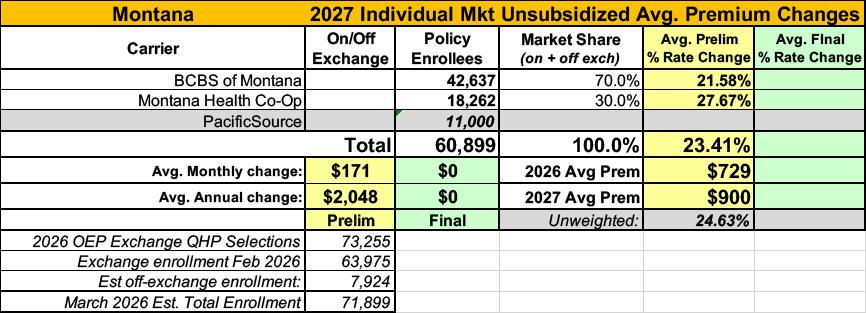
It's worth noting that PacificSource, which had around 11,000 effectuated enrollees in Montana's individual market (plus another 15,000 in the states small group market) as of spring 2026, is pulling out of the state This means that around 26,000 Montanans will be forced to shop around for coverage via a different insurance carrier (or at least their employers will, in the latter case).
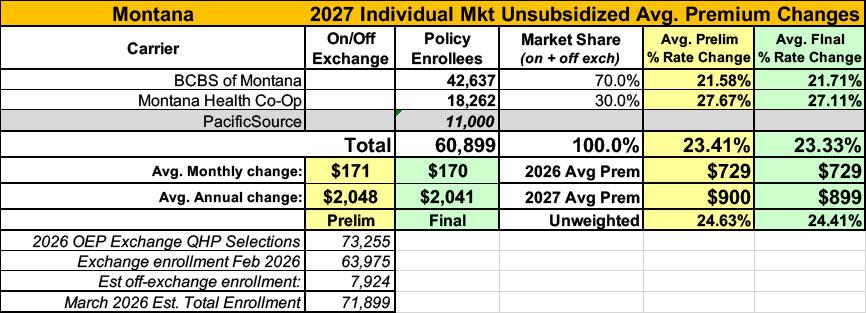
This leaves two carriers participating in Montana's ACA individual market: Blue Cross Blue Shield and Montana Health Co-Op. On average, they're asking to jack up 2027 premiums by over 23% for unsubsidized enrollees:
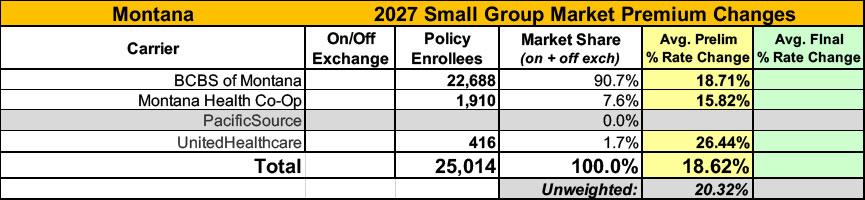
As for the remaining small group market carriers (BCBS, Mt Co-Op and UnitedHealthcare), they're looking to raise rates by 18.6% next year:
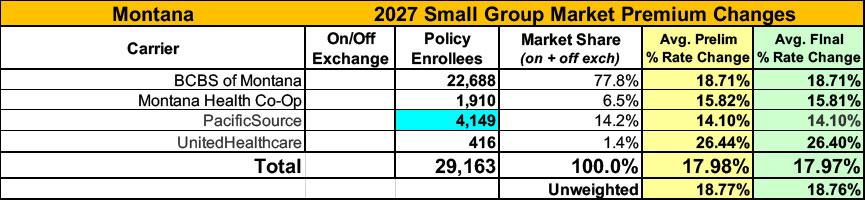
UPDATE 9/24/26: The final, approved 2027 rate filings for carriers on the Montana individual and small group markets have been published at the SERFF database...with virtulally no changes made in either market...except that it looks like PacificSource is not withdrawing from the small group market after all, as they have a full filing with rates going up 14.1% on average for their ~4,100 current enrollees:
Advertisement


