


Virginia: VA Marketplace posts detailed 2026 OEP data...with one really, really weird head-scratcher
Thu, 03/26/2026 - 2:24pm
The Virginia Insurance Marketplace has published raw Open Enrollment Period data for 2026; let's take a look at how it compares to last year's OEP:
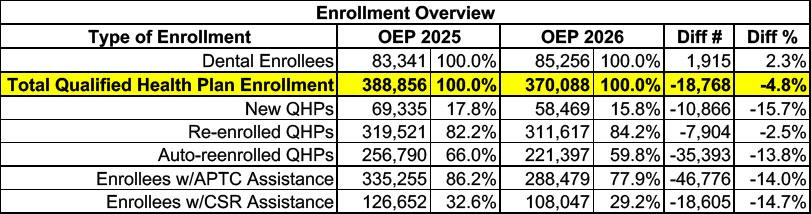
Here's the overview of Virginia ACA exchange enrollment over the course of OEP 2026 vs. 2025. Stand-alone dental plan enrollment is up 2.3%, which is nice, but overall major medical plan (Qualified Health Plan, or QHP) enrollment dropped by nearly 19,000 people, or 4.8% year over year.
There's also 14% fewer enrollees receiving federal tax credits than last year (nearly 47,000 people), while another 15% lost Cost Sharing Reduction assistance (CSR).
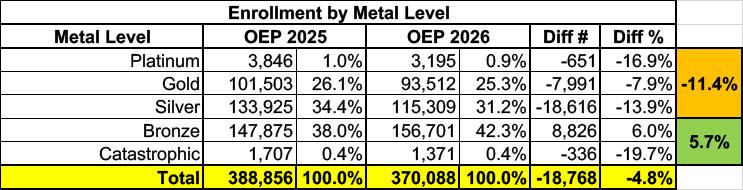
Next up, here's total enrollment broken out by metal level; again, at full price, Catastrophic plans generally have the lowest premiums but the highest deductibles, while Platinum plans are the reverse, although there are a lot of caveats in practice due to the way the financial subsidies for both premiums and CSR assistance work, along with other factors like Silver Loading and Premium Alignment.
In any event, there's over 27,000 fewer Virginians enrolled in Platinum, Gold or Silver plans (down 11.4% collectively)...while Bronze/Catastrophic plan enrollment increased by 5.7% vs. 2025. Again: Even when you disregard the 18,768 enrollees who dropped exchange coverage altogether, many of those who remained had to downgrade their coverage in order to mitigate the premium hikes:
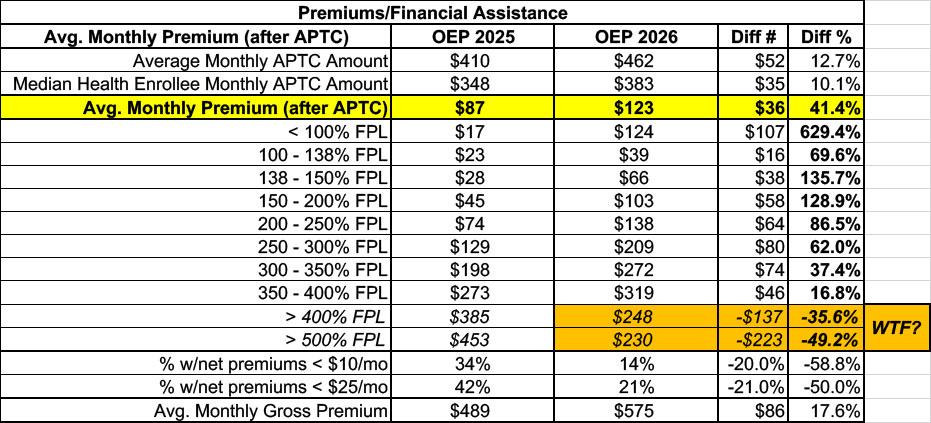
Next, here's how the actual premium subsidies and monthly premiums themselves break out year over year: The average net premium for Virginia ACA enrollees shot up more than 41% in 2026 in spite of the average subsidy amount going up 13% (keep in mind that 47,000 fewer people were eligible for federal subsidies at all this year).
The breakout by household income level is far more telling...although there's also something kind of odd there as well.
Last year Virginia had around 21,000 ACA exchange enrollees who earned less than 100% of the Federal Poverty Level (FPL). Normally that population isn't eligible for federal subsidies, with the exception being legally-present immigrants who have lived in the U.S. for less than 5 years. Unfortunately, the Trump Administration changed their definition of "legally-present" last year (which has now been codified into law under the GOP's Big Ugly Bill), which means these enrollees are no longer eligible for financial help...which likely accounts for a significant chunk of the enrollment drop itself.
Those who did remain enrolled for 2026, however, saw their average premiums jump from $17/month to $124/month...a whopping 629% increase.
Other income brackets also saw dramatic average net rate hikes due primarily to the reduced tax credits: 70% for those earning 100 - 138% FPL; over 125% for those earning 138 - 200% FPL, and so on.
The data points which made me scratch my head, however, are the last two income brackets listed: Over 400% and over 500% FPL. Both of these should have been dramatically higher, since no one earning more than 400% FPL are eligible for federal ACA tax credits any longer...yet the VA exchange has both of these groups seeing their average premiums drop dramatically, by 36% or 49% respectively. In fact, they have the > 500% FPL average even lower than > 400%.
This makes absolutely zero sense. Both of these income brackets should be averaging somewhere around the gross average of $575/month or even higher.
I've tried contacting the VA exchange without success so far but will update this if I find an answer to this mystery.
In any event, the percent of enrollees paying less than $10/month has dropped from over a third (34%) to just 14%, while the percent paying less than $25/month has been cut in half, from 42% to 21%.
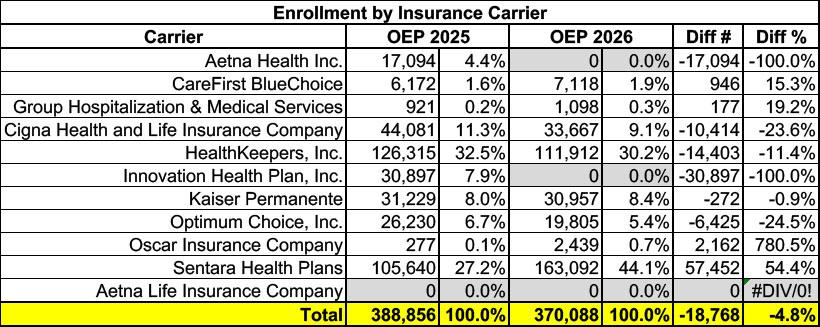
Finally, here's the breakout of total enrollment by carrier, which I don't have much to say about but figured I'd throw it in here for the heck of it:
Advertisement


